Seeds of knowledge: our huge seed collection is an essential reference tool
To the average person, one grass seed looks much like another. But not to our seed experts. They can spot the rogue seed in a sample sent for testing – and name it too. If not by eye, through comparisons with the vast number of samples in our in-house seed collection.
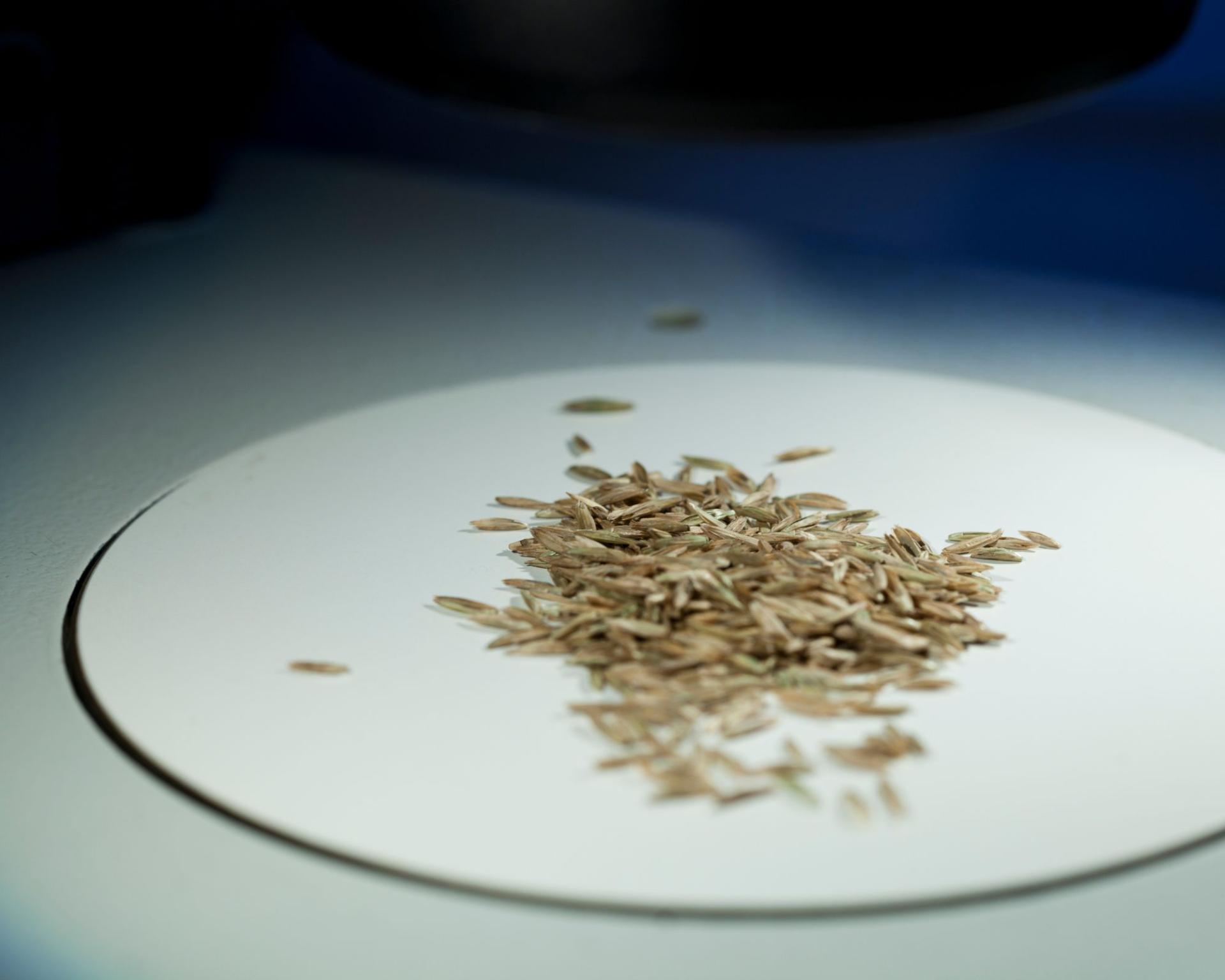
The expertise and experience of our seed analysts, and the scale of our seed collection, are invaluable. They form the backbone of our quality-assurance programme, supporting purity analysis, assessment of germination potential, and the filtering out of unwanted species. Reliable results are essential because growers, customers, and sales teams depend on them to assess and document seed quality.
The DLF seed identification project
Although our seed collection contains seed samples from around 1,600 species and cultivars, it’s never complete. There are always new cultivars and new species to gather and identify – and a backlog of seed samples that we’ve never had the time or resources to analyse. So our Danish HQ is now home to our Seed Identification Project.
Leading the project is Susanne Andersen, a lifelong botanist with nearly 50 years of expertise in seed analysis and identification. Susanne reviews and identifies seeds that have been collected over many years, including material originating from the Botanical Gardens in Copenhagen.
The collection is a vital reference tool. It supports analysts when a sample contains seeds that they cannot immediately identify.
“Every time we encounter a different seed in one of our samples, it needs to be identified correctly,” says Susanne. “The collection is a reference material that allows us to compare and confirm exactly what we are looking at.”
Building a bigger and better seed database
The Seed Identification Project is vital for updating and expanding our seed collections with new species. We are building a seed database that enables us to identify and analyse seeds across our worldwide business.
While digital tools and online images are hugely helpful, physical seed collections are still crucial for accurate seed identification. A collection lets us study unknown seed samples and known reference seeds side by side. Our analysts can see the subtle details that make for accurate identification.
As Susanne says, “You can find many good pictures online today, but you can’t turn the seed around, place it next to your sample, and study it from every angle. That is why a physical seed collection is still incredibly valuable.”

Human expertise is fundamental to what we do
Seed identification is detailed and multifaceted. Our analysts use specialist cameras to examine the shape, colour, texture, and patterns of seeds in highly magnified detail. To distinguish between closely related species, they call on their own deep understanding of seed families and their unique characteristics.
Although technological advances have improved the process, the need for human expertise is unchanged. Modern cameras provide better and clearer views, and are far more comfortable to work with than the small magnifying lenses analysts used decades ago. Even so, knowledge, experience, and careful observation are still at the heart of seed identification.

Seed knowledge and expertise you can count on
Our Seed Identification Project is one more example of the depth of expertise within DLF. The project reaffirms the value of strong in-house knowledge and the ability of our ISTA*-accredited laboratories to support high-quality seed testing and identification.
With each new addition to our seed collection, we expand the database that supports reliable seed analysis, and extend our ability to identify every seed in every sample we come across. By building a strong reference collection, we ensure high-quality analyses for years to come.
Ask about seed quality
To learn more about seed quality and the level of seed purity that would be suitable for your grass-seed application, speak to your local DLF representative.
* International Seed Testing Association