The natural advantage of clover-grass
As economic and environmental pressures increase, livestock farmers are looking for better-performing forage mixtures. Clover-grass could well be the way forward – a mixture with a high protein content, good environmental credentials, and the ability to boost soil quality while cutting input costs.
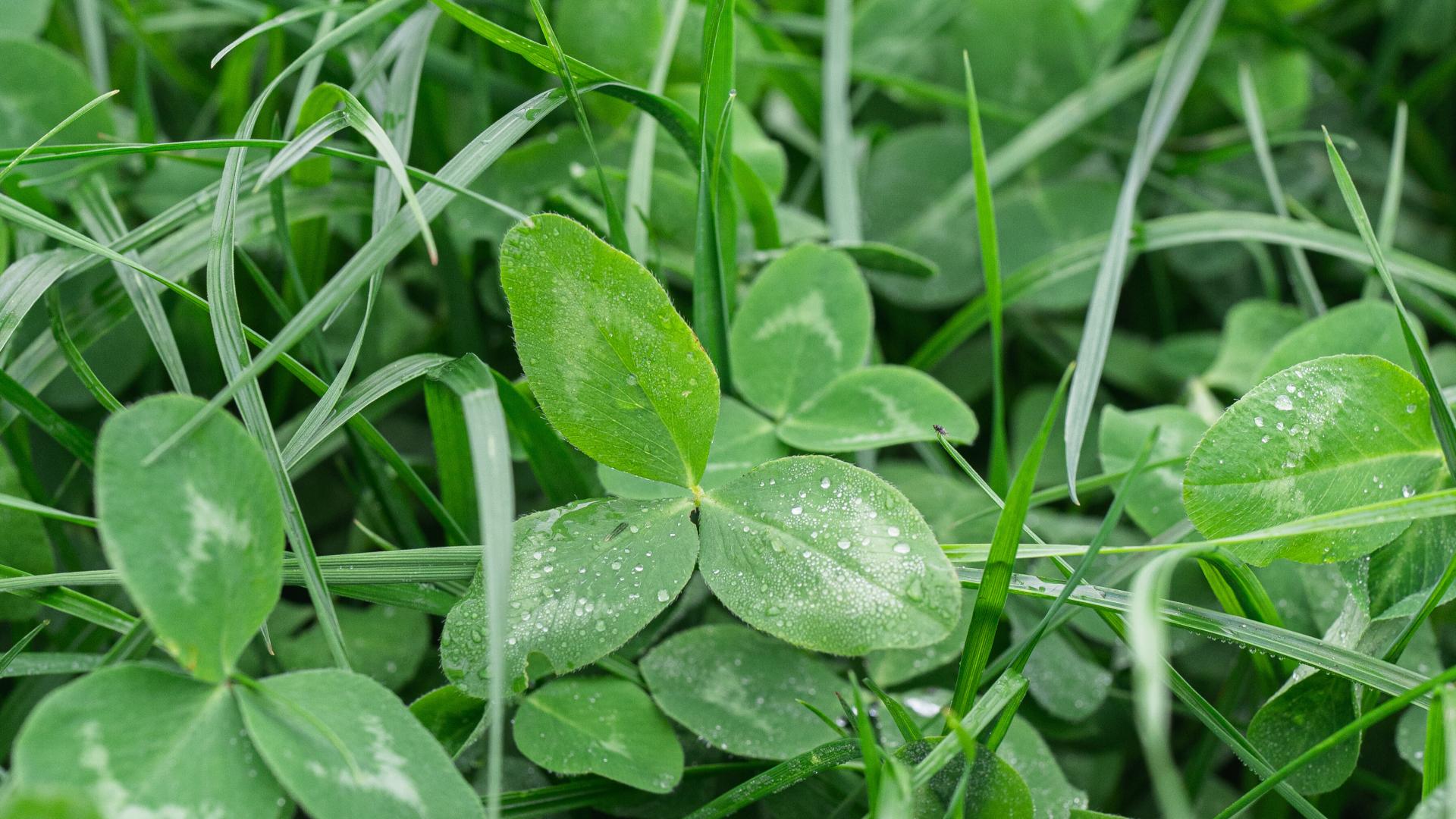
More nutritional value from your feed
Clover-grasses are forage seed mixtures containing grasses and clover. They have a higher protein content than grass-only mixtures. By providing a balanced ratio of energy, protein and fibre, clover-grasses boost livestock nutrition and farm finances. They cut costs and improve productivity by reducing a livestock farmer’s dependence on expensive feed supplements.
The forage crop that improves soil
Clover is the must-have forage component for improving soil quality. Clover works with symbiotic bacteria to fix free nitrogen from the air, then slowly releases it for surrounding plants to use. This is a much more targeted way to boost the growth of forage crops. The sward needs less nitrogen fertiliser – possibly no additional nitrogen – which reduces input costs and avoids wasteful leaching into groundwater or nearby watercourses.
The more varied plant composition within clover-grass mixtures supports biodiversity, attracts pollinators and improves a sward’s microclimate. At the same time, the combined clover-grass root systems work to improve soil structure and water infiltration.
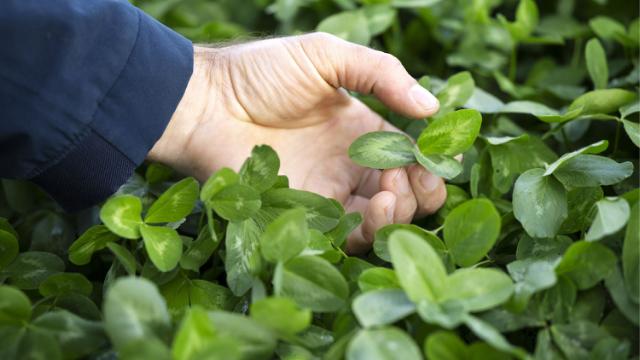
Tips for clover-grass establishment and growth
Sow clover-grasses in spring (March to May) or late summer (August to September) when soil is moist. To avoid sowing when the soil is dry – in drier climates, for example – late-summer sowing is often more reliable.
If late summer rains leave the ground damp enough, newly sown clover-grasses have time to grow a strong root system before winter which produces a much more even start the following spring. A common mistake is to sow clover-grass when the ground is too dry, and the crop fails to establish well.
Before sowing, gently level the soil and remove weeds. Poor seedbed preparation (too many weeds and an irregular, lumpy surface) makes germination difficult.
A typical sowing rate would be 25 to 35 kg/ha, depending on the mixture. Avoid sowing too deep: 0,5 to 1,5 cm is ideal for good germination. And look for a soil pH of at least 6.0; at a lower pH, clover may struggle without additional lime.
Clover-grass crop management
Delay the first mowing or grazing till after clover-grass has reached a height of about 25 to 30 cm. Cutting or grazing young clover too early damages growth. Give the plants enough time to form a strong root system and properly establish themselves.
Although clover-grasses are mostly self-sufficient in nitrogen, they may well benefit from supplements of other nutrients to support healthy growth and maintain long-term sward vitality.
During droughts, lightly roll the soil to break up the soil crust, improve water infiltration and stimulate tillering. If drought causes the vegetation to become uneven, it’s worth filling the gaps with suitable grasses. Weed control is vital too, especially during the first weeks after establishment. Mechanical measures are usually enough to treat minor weed infestations. For a heavy infestation, targeted chemical control may be needed.
